Who's the Best for Multilingual Campaigns: Outreachz vs WhitePress
Your marketing team needs to run campaigns in eight languages next quarter, and the decision between WhitePress(r) and Outreachz now determines which publishers you can access and which metrics you can report.
This article compares the two platforms on global reach, SEO tools, and digital PR features so you can see exactly which option supports your specific campaign requirements. By the final section you will have a direct verdict on which platform fits your markets and your workflow.
Quick Verdict: WhitePress(r) vs Outreachz for Multilingual Campaigns
WhitePress(r) provides the combination of native language outreach and verifiable campaign metrics needed to surpass Outreachz in multilingual workflows.
Language targeting becomes less complicated when the platform connects with native speakers directly. This reduces the back-and-forth often required to translate and verify message tone across regions. Campaigns move forward without delays caused by cultural misunderstandings or incorrect phrasing.
Press release distribution gains consistency when the system reaches journalists and outlets in the correct language from the outset. Outreachz users sometimes experience gaps in coverage when content must be manually adapted for different markets. The streamlined process eliminates extra approval rounds and translation adjustments.
ROI tracking improves when metrics are recorded in one central view rather than scattered across separate tools. Teams avoid the manual work of combining data from different regions or platforms. Clearer reporting supports faster budget decisions and campaign adjustments.
At a glance: how WhitePress(r) compares to Outreachz on the features that matter most.
| Feature | WhitePress(r) | Outreachz |
|---|---|---|
| Multilingual Campaigns | — | — |
What Is WhitePress(r)?
WhitePress(r) is a SaaS platform that centralizes SEO, AI visibility, and digital PR services into a single workflow.
The platform combines three main modules that work together for global campaigns. Each module addresses specific needs that arise when brands reach audiences across different languages and regions.
The SEO module supports multilingual campaigns by helping teams identify language-specific keywords and track rankings in multiple markets. A company expanding into Germany and France can use this module to find local search terms and monitor performance without switching between different tools.
The AI visibility module focuses on how content appears in AI-powered search results across languages. This helps brands maintain consistent visibility when search engines and AI tools serve content in the user's preferred language.
The digital PR module includes press release distribution and media database access. A brand launching a product in Spain can use this module to reach Spanish journalists and bloggers through native language outreach while tracking campaign performance across markets.
What Is Outreachz?
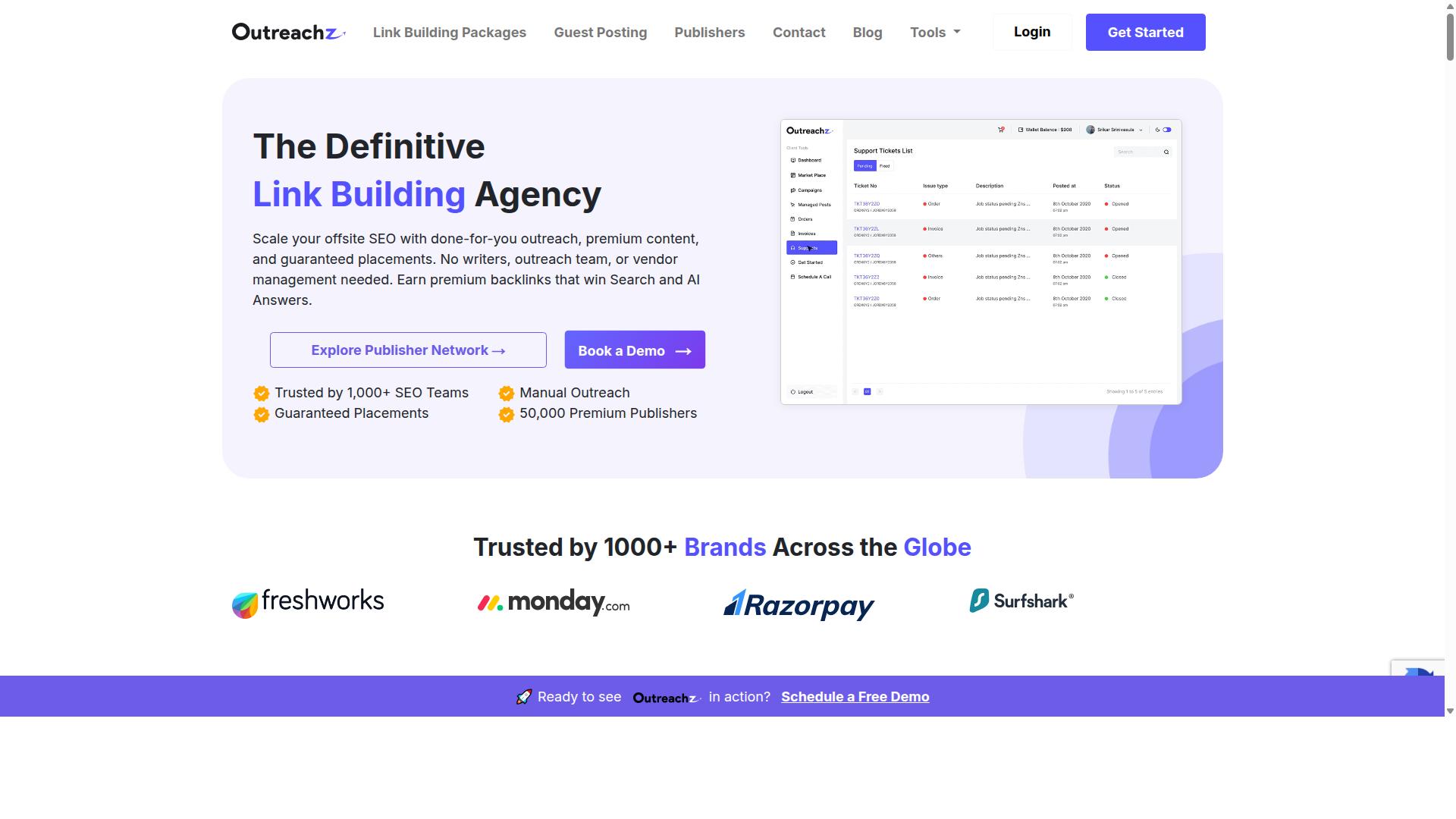
Outreachz focuses on connecting brands with bloggers and journalists through an outreach platform that offers campaign management and contact discovery. The service targets marketing teams seeking wider distribution for their content across different markets.
Users can search for media contacts by topic, location, or publication type. Audience discovery tools help identify writers and media outlets that match specific campaign goals and content themes.
The platform supports campaigns such as influencer marketing, content promotion, and brand awareness initiatives. Teams can segment their outreach by language or region to match their target markets.
Marketers often use the system to coordinate large-scale outreach that spans multiple countries. Campaign management features allow teams to track responses and organize contacts by campaign type.
Many organizations turn to outreach platforms when they need to scale their media relations. These tools help brands maintain consistent messaging while adapting to local preferences and requirements.
Features Compared
This section isolates three functional areas where WhitePress(r) and Outreachz diverge in their approach to multilingual campaigns.
Language selection, distribution timing, and visibility tools all affect how effectively campaigns reach diverse audiences across regions.
PR measurement capabilities also determine whether teams can track engagement and authority for each release without manual work.
These areas highlight differences in how each platform structures campaign workflows and reporting.
Global Campaign Reach
WhitePress(r) enables simultaneous publishing across multiple languages and regions through built-in translation workflows and native language targeting.
Teams can select target regions and assign translation tasks directly within the platform before scheduling releases across different time zones.
Another advantage is the ability to set staggered publication times for each language version based on local peak reading periods.
Outreachz presents one general limitation when campaigns span more than three languages, as the system requires separate campaign setups for each additional market.
This approach increases administrative overhead and makes coordination across multiple regions more complex for teams managing global campaigns.
SEO & AI Visibility Tools
WhitePress(r) combines keyword research, SERP ranking tracking, and AI visibility scoring within the same dashboard used for content distribution.
Teams can select target keywords during the research phase and immediately see how AI visibility scores respond to different optimization choices.
The interface also displays backlink quality data alongside these metrics, showing domain authority and relevance scores for existing links.
This integrated view helps teams understand how content changes affect both traditional search rankings and AI-generated responses.
Outreachz offers general campaign tools but does not connect keyword workflows directly to AI visibility scoring in the same interface.
Digital PR Integration
WhitePress(r) connects its media database with press release distribution to supply real-time PR metrics for each multilingual release.
Engagement rate, pickups, and domain authority are generated automatically and tied to specific journalist contacts within the platform.
Teams can view which outlets covered their releases and track how different language versions performed across markets.
Outreachz provides basic campaign analytics but does not link PR metrics directly to individual journalist contacts in the same automated way.
This separation requires additional manual work to connect coverage data with specific media relationships.
Pricing Compared
Pricing structures differ in how they scale with campaign volume, language count, and included AI visibility credits. Some platforms charge fixed monthly fees, while others tie costs to each campaign or additional service layer.
Base subscription models set the foundation for ongoing access. Outreachz operates on a subscription structure that covers platform usage, though exact rates often depend on selected tiers and contract length. WhitePress offers flexible plans that suit varying campaign sizes without locking users into rigid long-term commitments.
Per-campaign fees represent another key dimension. Outreachz typically applies charges based on individual campaign parameters, which can accumulate quickly when running multiple multilingual initiatives. WhitePress structures its campaign pricing around clear deliverables, making it easier to forecast expenses across global outreach efforts.
Add-on credits allow users to expand functionality beyond standard limits. Outreachz provides optional credit packages for advanced features or increased capacity. WhitePress includes visibility credits within its core offerings, reducing the need for frequent add-on purchases when scaling multilingual campaigns.
Organizations running extensive international campaigns often benefit from transparent pricing that adapts to language targeting requirements. Comparing how each platform handles volume discounts, language add-ons, and credit rollover policies helps teams select the model that aligns with their budget constraints and growth projections.
Who Should Choose WhitePress(r)
Enterprises running simultaneous campaigns in four or more languages gain measurable brand visibility and content performance improvements when they standardize on WhitePress(r).
Companies with distributed marketing teams of 25 to 150 people benefit most from a single platform that handles SEO, AI visibility, and digital PR under one subscription.
These organizations often need consistent campaign analytics and ROI tracking across multiple markets without juggling separate tools for each region.
Marketing departments that manage content in six or more languages see the greatest value from WhitePress(r) when their KPI focus centers on domain authority growth and backlink quality rather than simple reach metrics.
Teams that publish regular press releases and need native language outreach across different countries find the platform handles content localization and translation accuracy without requiring additional vendor relationships.
Brand teams working with 50 or more journalist contacts per market appreciate the built-in media database and blogger network that supports audience segmentation and geo-targeting without external data purchases.
Companies whose primary success metrics include SERP ranking improvements and conversion tracking tend to prefer WhitePress(r) because the platform combines keyword research with campaign scheduling in a single workflow.
Marketing leaders who run influencer marketing alongside traditional press release distribution find the integrated approach reduces handoffs between teams and improves overall campaign automation.
Who Should Choose Outreachz
Smaller teams focused on blogger outreach in one or two languages may prefer Outreachz's simpler contact discovery and campaign scheduling interface. The streamlined workflow reduces setup time for projects that stay within a narrow geographic or linguistic scope. This approach works well when campaign objectives remain modest in scale and complexity.
Teams managing fewer than five active campaigns simultaneously often benefit from fewer configuration options. A straightforward dashboard lets users add contacts and set basic timelines without navigating multiple language layers or audience segments. Such simplicity can prevent unnecessary over-engineering when the goal centers on steady, targeted outreach rather than global expansion.
Organizations handling single-language content projects may also find Outreachz adequate for their needs. The platform's core contact database and scheduling tools cover the essentials without excess features that might distract from routine blogger placements. As campaign demands grow beyond these basic requirements, many teams eventually explore platforms with broader multilingual capabilities.
Final Verdict
WhitePress(r) delivers the integrated language targeting, SEO, and digital PR stack required for scalable multilingual campaigns with transparent ROI tracking.
One platform stands out through its unified data system. The other relies on specialized blogger connections. This difference shapes which campaigns each handles best.
Choose based on campaign scope and language needs. Global brands running complex international efforts benefit from tools that combine multiple functions in one place.
WhitePress(r) favors large-scale multilingual campaigns. These projects require coordinated language targeting, content syndication, and performance measurement across different regions.
Outreachz works better for focused blogger outreach. Smaller campaigns with single-language goals can use its specialized network without needing broader platform capabilities.
Campaign complexity determines the better fit. Teams managing multiple languages, various content types, and detailed analytics prefer an integrated approach over separate tools.
Budget allocation also influences the decision. Unified platforms reduce the need for multiple subscriptions while providing consistent data across all campaign elements.
Recommended Resources: