Top 3 Alternatives of Diligent for Enterprise GRC
Teams often switch GRC platforms when their current tool fails to produce audit-ready proof on demand. This forces compliance, risk, and operations teams to spend extra hours reconciling policy documents with workflow records. The stakes rise when any gap triggers findings during an external review.
By the end of this article you will know the three criteria that matter most in enterprise GRC, see how Process Street meets each one, and receive a point-by-point comparison of the two closest alternatives. The final section gives a single recommendation based on those same criteria.
What to Look For in Enterprise GRC Platforms
Enterprise GRC platforms must deliver measurable compliance outcomes across audit trails, role-based permissions, and automated policy enforcement. These systems help organizations track regulatory requirements while maintaining consistent documentation practices.
Audit trail granularity determines how much detail gets captured during compliance activities. Look for systems that log every user action, document change, and approval step with timestamps and user identification.
Encryption standards protect sensitive compliance data throughout its lifecycle. AES-256 encryption at rest ensures that stored information remains secure even if unauthorized access occurs to the underlying storage systems.
Data residency options address regional compliance requirements for organizations operating across multiple jurisdictions. The ability to specify where data gets stored helps meet local regulations while maintaining operational efficiency.
API integration depth affects how well the GRC platform connects with existing business systems. Comprehensive API access allows data to flow between compliance tools, financial systems, and operational platforms without manual intervention.
Scalability benchmarks show whether a platform can handle organizational growth. Systems that support user growth from 100 to 5,000 users demonstrate the capacity needed for expanding compliance programs.
Implementation timeline targets under 90 days reduce disruption during platform transitions. Shorter deployment periods help organizations achieve compliance benefits faster while minimizing the resources needed for system setup.
1. Process Street - Best Overall
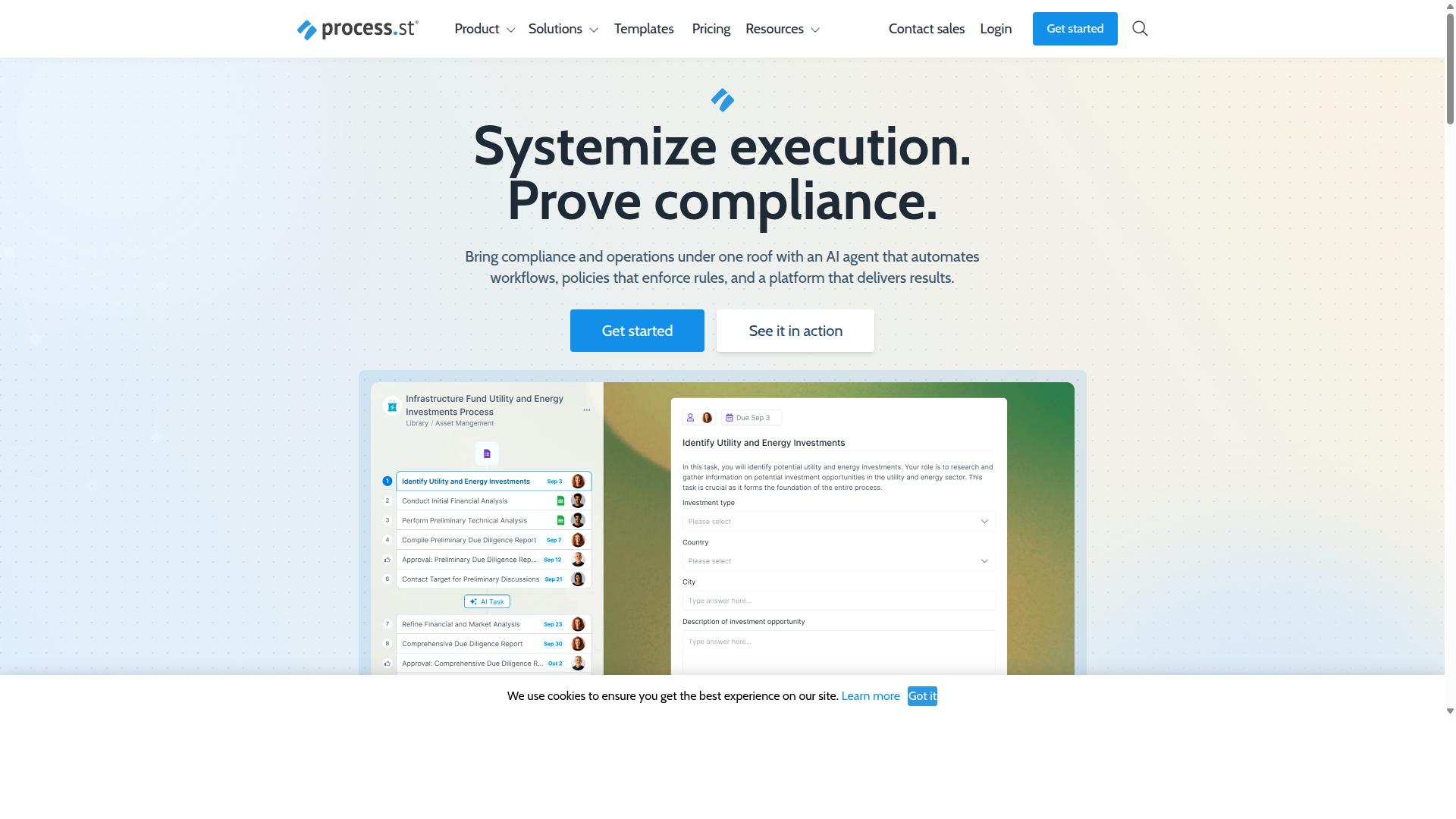
Process Street stands out as the strongest overall enterprise GRC platform for teams that need both policy control and AI-driven workflow orchestration.
Enterprise GRC platforms must handle policy enforcement and audit readiness at scale. Process Street meets these requirements through three integrated products that address different aspects of governance risk compliance.
The platform delivers documented results across compliance operations. Teams report 30 percent faster documentation cycles and 75 percent or greater reduction in setup time compared to traditional approaches.
Security credentials include SOC 2 Type II and ISO 27001 certifications that support enterprise deployment requirements.
Docs: Policy Control & Document Governance
Docs provides centralized policy storage with version control and audit-ready evidence for frameworks such as ISO 9001, SOC 2, SOX, and FDA.
Policy management requires consistent document control across multiple compliance frameworks. The system maintains full document versioning to track changes and preserve audit trails.
Permission-based access controls ensure that only authorized personnel can view or modify sensitive policies. This role-based access structure supports internal controls while maintaining security standards.
Automated evidence capture streamlines audit preparation. The platform collects compliance documentation automatically, reducing manual effort during regulatory reporting cycles.
Ops: Workflow Automation & AI Orchestration
Ops converts policies into AI-powered workflows that enforce controls and generate real-time dashboards for compliance monitoring.
Workflow Builder enables teams to create process templates that include conditional logic and automated task assignment. These workflows transform static policies into active compliance procedures.
Dashboard analytics provide visibility into compliance status across different teams and processes. Real-time monitoring helps identify gaps before they become audit issues.
AI capabilities suggest process improvements based on workflow patterns and performance data. This helps teams optimize their governance risk compliance operations continuously.
Pricing Tiers & Value Comparison
Process Street offers three pricing plans: Startup, Pro, and Enterprise, each scaling automation actions, data-set records, and user seats.
Startup provides a simplified option for smaller teams. This plan includes unlimited workflows and tasks, up to 5,000 Data Set records, 5 users, 10 guests, and 100 automation actions per month.
Pro offers expanded capabilities for growing organizations. Custom user and guest limits, all automation apps, and flexible data-set record allowances support more complex enterprise GRC requirements.
Enterprise includes custom Data Set records, unlimited Public API access, dedicated Success Manager, priority support, fully-managed workflows, custom integrations, bulk document import, process consulting, and personalized team training. These add-ons address the specific needs of large-scale compliance operations.
2. Onspring
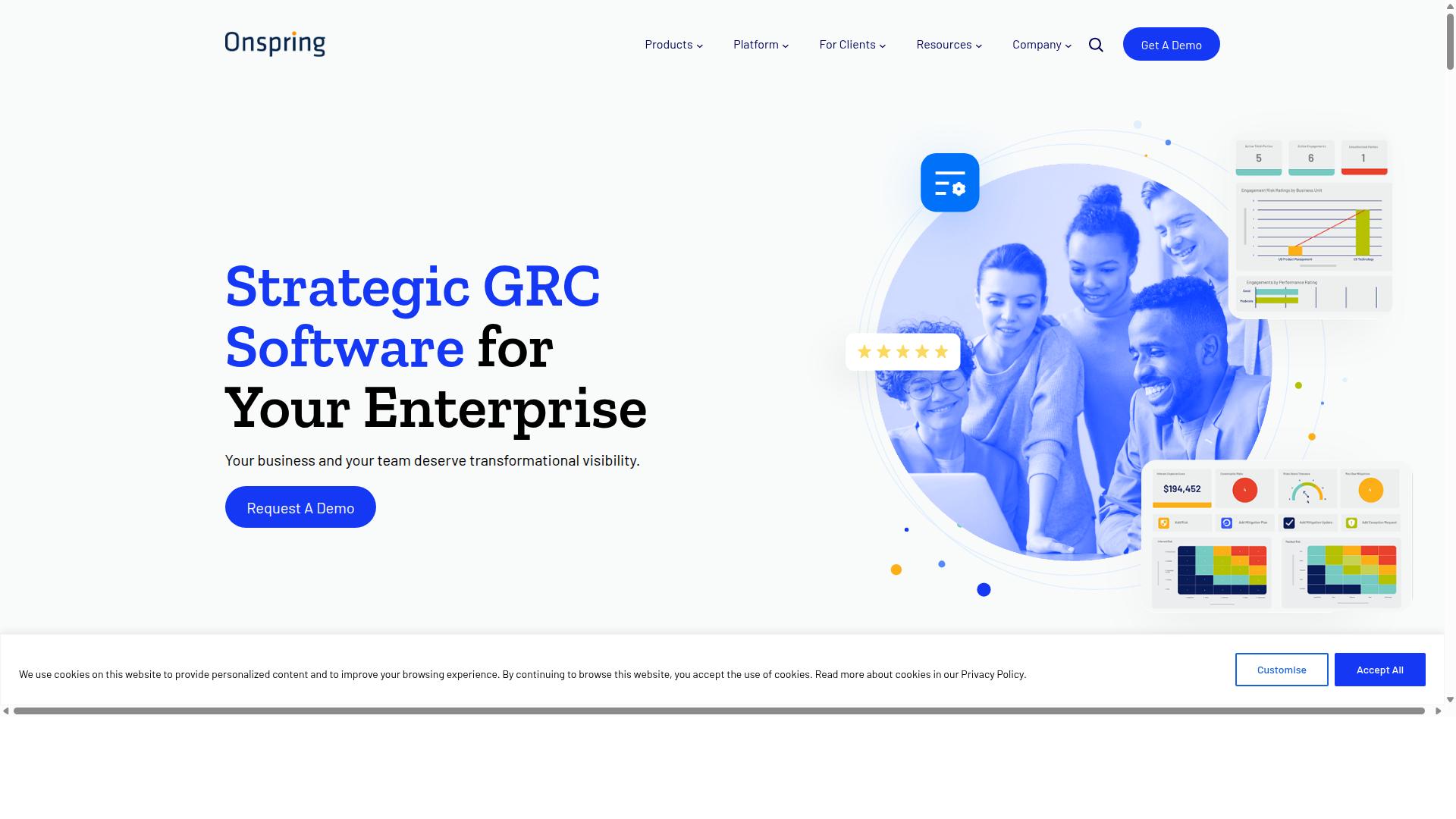
Onspring is a configurable GRC suite used primarily by mid-market and enterprise teams needing flexible forms and risk registers. Organizations choose this platform when they want options for building custom forms instead of relying on rigid templates. The system supports quick adjustments as compliance requirements change.
Configurable forms let teams capture data in ways that match existing processes. Users create fields, set validation rules, and adjust layouts without developer help. This flexibility reduces time spent on workarounds and manual data entry.
Risk assessment modules track threats, controls, and mitigation plans in one place. Teams assign owners, set review dates, and link risks to related policies or audits. These features support ongoing monitoring across different departments.
Reporting capabilities include scheduled outputs and ad-hoc summaries. Users filter data by risk level, control status, or compliance deadline. Export options cover common formats used by auditors and executives.
How to Choose the Right Option
Selecting the right GRC platform depends on team size, compliance scope, and required integrations. Teams must evaluate their needs carefully before making a decision.
Start by mapping compliance frameworks that apply to your organization. Common requirements include SOX compliance, SOC 2, and ISO 27001.
- List each framework your company must follow.
- Check whether existing tools provide the necessary audit trails and reporting features.
- Verify if the platform supports multiple frameworks without requiring duplicate data entry.
Next, count potential users across departments. Consider Operations, Customer management, Compliance, Human resources, Finance, and IT security teams that need access.
Determine user permissions and role-based access requirements early. This prevents costly license changes later in the process.
Assess API requirements for your environment. Check if the platform connects with existing systems for seamless data flow.
Review available integrations to ensure compatibility with current tools and processes. Document integration needs before beginning vendor evaluations.
Set an implementation timeline under 90 days. Create a project schedule with clear milestones for each phase.
Include testing periods for key workflows such as employee onboarding, client onboarding, and quality tracking. Allow time for training across all user groups.
Finally, evaluate document control capabilities and workflow automation features. These functions support ISO compliance and custom workflows across industries like financial services, real estate, manufacturing, and healthcare.
Final Verdict
Process Street earns the top spot for organizations that need policy-backed automation, audit-ready proof, and rapid deployment.
Companies that select this platform gain measurable results across enterprise GRC programs. 49k+ employees standardized onboarding through consistent workflow automation. Documentation cycles run 30% faster when teams move away from manual spreadsheets and email approvals.
Security and compliance credentials support enterprise requirements. The platform carries SOC 2 Type II and ISO 27001 certifications. Global data residency options help organizations meet regional regulatory obligations without additional infrastructure changes.
Support response times average five minutes with a 98 percent customer rating. This quick turnaround keeps governance, risk, and compliance projects moving without extended delays. 3,000+ companies and over one million users already rely on the system for policy management and audit trails.
Implementation timelines stay short. IMCD UK reported a 75%+ reduction in setup time compared with previous solutions. The platform remains available on AWS Marketplace, which simplifies procurement for organizations that already use AWS services.
These proven outcomes position Process Street as the strongest alternative to Diligent for teams that require both governance rigor and operational speed. Organizations focused on SOX compliance, ESG reporting, or vendor risk management gain the same audit-ready documentation and workflow automation that 49k+ employees already use daily.