7 WhatsApp Bulk Message Sender Platforms for Early-Stage Companies
Your team is ready to send bulk WhatsApp campaigns, but the wrong platform will burn your budget and your sender reputation. Early-stage companies need tools that scale without complex setup or hidden API costs. By the end of this guide, you will know exactly which of the seven platforms fits your team size, your monthly volume, and your support needs.
You will get a clear breakdown of pricing, messaging limits, and ease of use for each option, plus a definitive #1 pick for growing teams. We compare Com.bot, Wati, Twilio, AiSensy, Getgabs, Sendwo, and Gupshup against the criteria that actually matter at your stage. No fluff, just a decision you can make today.
What to Look For in a WhatsApp Bulk Message Sender for Early-Stage Companies
Early-stage companies need a WhatsApp bulk message sender that balances cost, compliance, and scalability-here's what to evaluate before you commit. The right platform should grow with you without demanding enterprise-level budgets from day one.
Affordability is the first filter. Look for transparent pricing tiers and a free trial that lets you test real workflows. Pay-per-message models can work for lean teams, but monthly plans often offer better predictability as your contact list grows.
Ease of use matters more than raw power. A clean desktop dashboard, a reliable mobile app, and simple broadcast list creation should be standard. If you need a chatbot integration or WhatsApp Web access, verify those features work before you pay.
Deliverability is non-negotiable. Check the platform's delivery rate track record and how it handles rate limits set by WhatsApp. A tool that queues messages intelligently protects your sender reputation and keeps your messages out of the spam folder.
Compliance should be built in, not bolted on. The platform must enforce opt-in consent and offer spam prevention tools by default. WhatsApp Business API rules are strict, and a compliant sender keeps your account active and your customers happy.
Essential features for early-stage teams include message templates, personalization tokens, and drip campaigns. A/B testing helps refine your click-through rate, while message scheduling ensures you reach customers at the right moment.
Multimedia support matters more than most startups expect. Look for PDF sharing and location sharing capabilities, plus CRM sync to keep your contact management organized with segmentation, tags, and custom fields.
Security is the final checkpoint. End-to-end encryption should be standard for all messages. Review the API documentation and webhook support to confirm the tool integrates with your existing stack via REST API or cloud-based deployment.
For lean teams, the ideal platform combines a free trial, clear pricing, and solid API documentation. Skip tools with convoluted onboarding and prioritize those where you can send your first campaign within an hour.
1. Com.bot - Best Overall
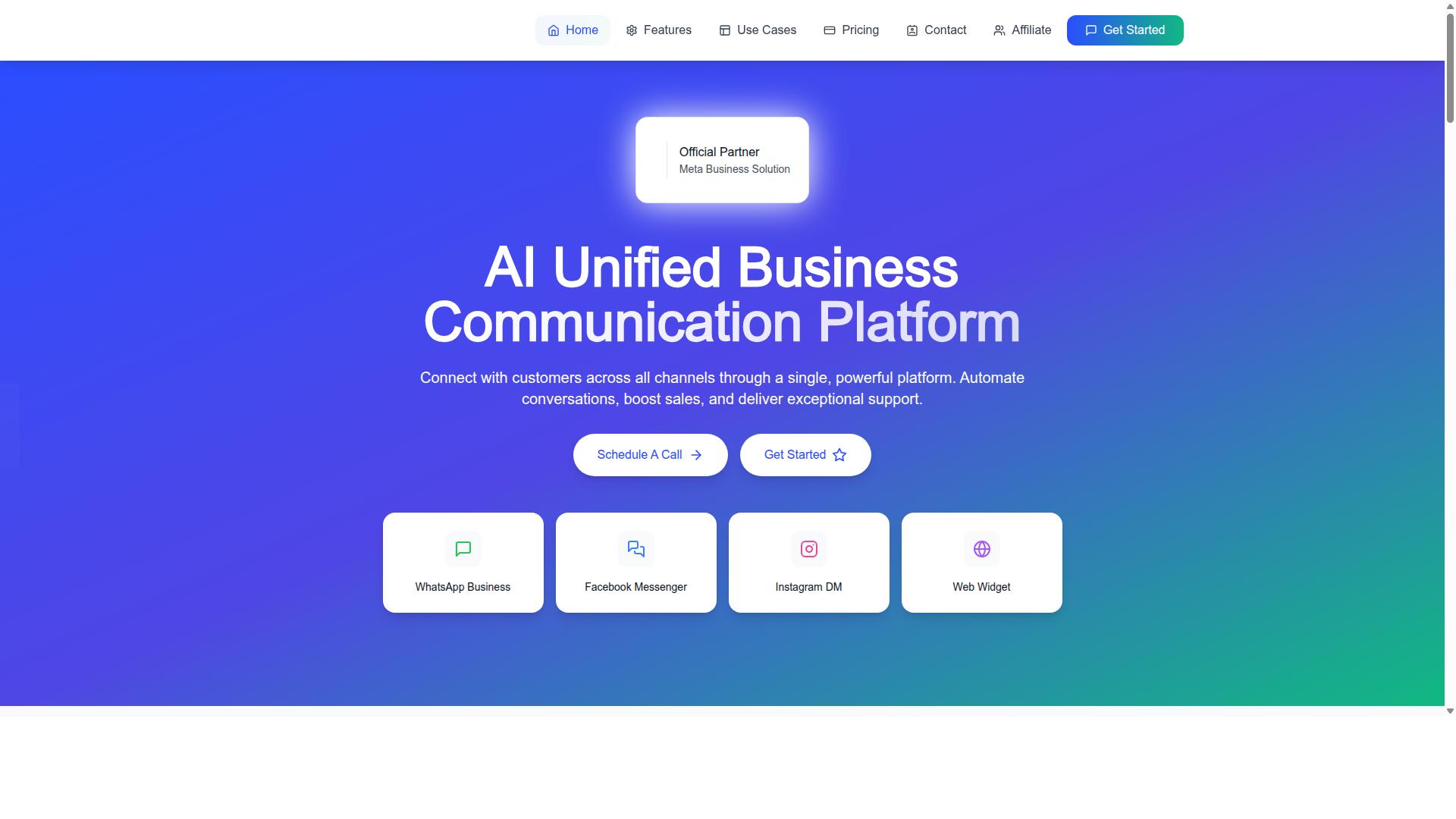
Com.bot is the best overall WhatsApp bulk message sender for early-stage companies because it combines powerful automation with a user-friendly interface at a competitive price. It is an official Meta Business Partner, which means your campaigns run on the trusted WhatsApp Business API rather than risky unofficial methods.
The platform handles the full messaging lifecycle. You get a unified team inbox, a visual bot builder with drag-and-drop controls, native payments for WhatsApp transactions, and multi-channel support for WhatsApp, Facebook, and Instagram.
Scale is not a concern here. Com.bot serves 23,000+ customers and processes 25M+ messages per day, so your startup will not outgrow the infrastructure. For early-stage teams, that reliability matters more than flashy extras.
Why Com.bot Leads for Early-Stage Teams
Com.bot wins for early-stage teams by offering a drag-and-drop bot builder and a free trial that lets you test before paying. You can build a working chatbot without writing a single line of code, which saves both time and developer budget.
Pricing is designed for startups with limited cash flow. The Silver Plan costs $149 per quarter, the Gold Plan is $349 per quarter, and the Platinum V1 tier sits at $2500 per quarter. WhatsApp messaging runs at actual Meta rates with no markup, so your costs stay predictable.
The platform supports 100K+ bots already created by its user base, and enterprise-grade security with end-to-end encryption keeps your customer conversations protected. Setup is quick, and the automation builder connects to 1000+ integrations for CRM sync and other workflow tools.
Engagement gets a boost from built-in message templates and personalization tokens. You can send bulk messages that feel individual, which improves both click-through rate and delivery rate compared to generic blasts. Add-ons cost $10 per month for extra team members, social channels, or bot triggers, so scaling your operation stays affordable.
The unified team inbox means your support agents see every conversation in one place, no matter which channel it came from. Combined with role-based access and the visual bot builder, Com.bot gives early-stage startups a complete WhatsApp bulk message sender that grows with them.
2. Wati
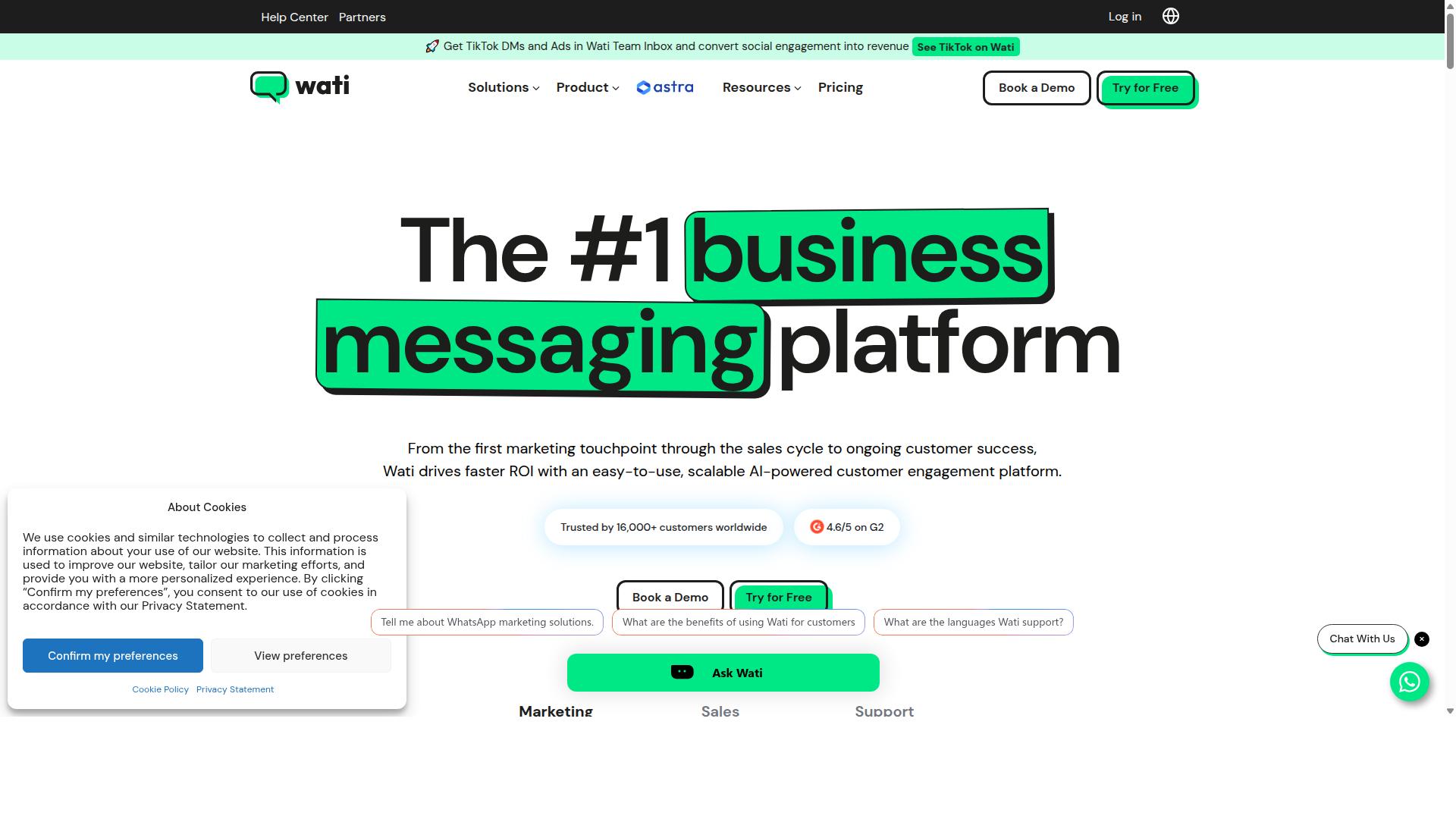
Wati is a solid alternative for early-stage companies that need a straightforward bulk messaging tool with basic automation. It provides access to the WhatsApp Business API, which means your team can send broadcast messages without hitting the limits of the standard WhatsApp app.
The platform includes a multi-agent team inbox and supports chatbot integration for handling simple customer queries. This makes it a practical choice for small teams that want to manage conversations in one place rather than juggling multiple phones or personal accounts.
Wati offers a free trial and several pricing tiers, so you can test the waters before committing. However, the platform may lack some advanced features that growing companies eventually need, such as native payments or full multi-channel support beyond WhatsApp.
For CRM sync, Wati integrates with common tools, but research suggests you may still need additional software for complete sales tracking. Bulk campaigns are serviceable but less advanced than dedicated marketing platforms, which matters if your strategy relies heavily on segmentation and drip campaigns.
Early-stage startups that prioritize ease of use over depth will find Wati approachable. Just keep in mind that as your messaging volume grows, you may outgrow its automation capabilities and need to layer on extra tools for a complete workflow.
3. Twilio
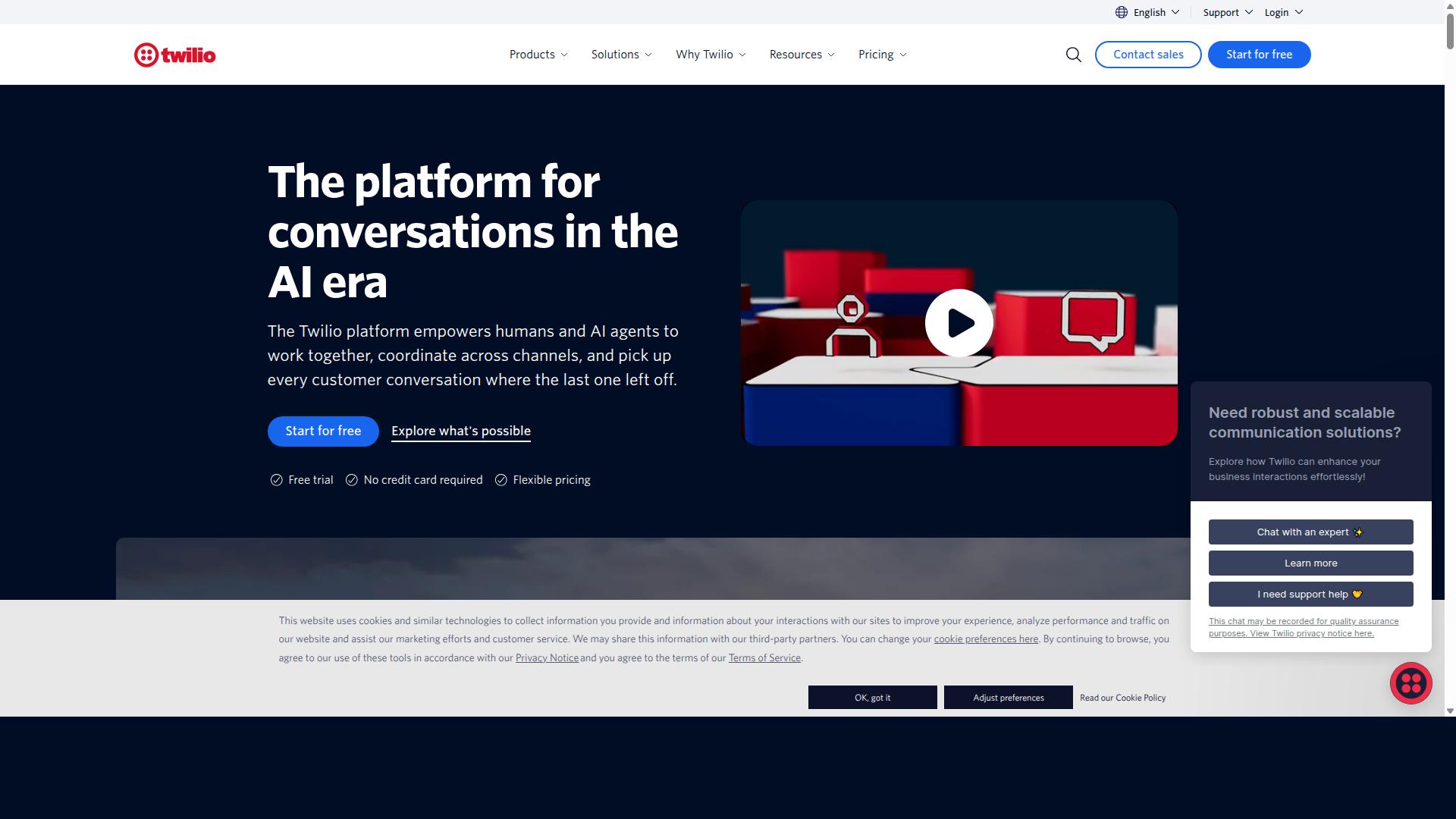
Twilio is a developer-first WhatsApp API provider that gives you full control but requires technical expertise to set up. It is a cloud-based platform built around extensive API documentation, webhooks, and REST API flexibility, making it a powerful option for startups with dedicated engineering resources.
The platform offers a very high level of automation and customization, which is why it is often suited for larger enterprises. For early-stage companies, this granular control comes with a steep learning curve that can slow down your go-to-market timeline.
Twilio operates on a pay-per-message pricing model, which can be attractive for scaling usage. However, the total cost of ownership includes the engineering time required to build, maintain, and troubleshoot your integration. Non-technical founders may find themselves spending more time wrestling with code than actually sending broadcasts.
If you have a skilled development team, Twilio gives you unmatched flexibility for bulk messaging workflows. If you do not, a more user-friendly WhatsApp message sender with a ready-made dashboard is likely a better fit for your early-stage startup. The trade-off is between deep customization and immediate usability.
4. AiSensy
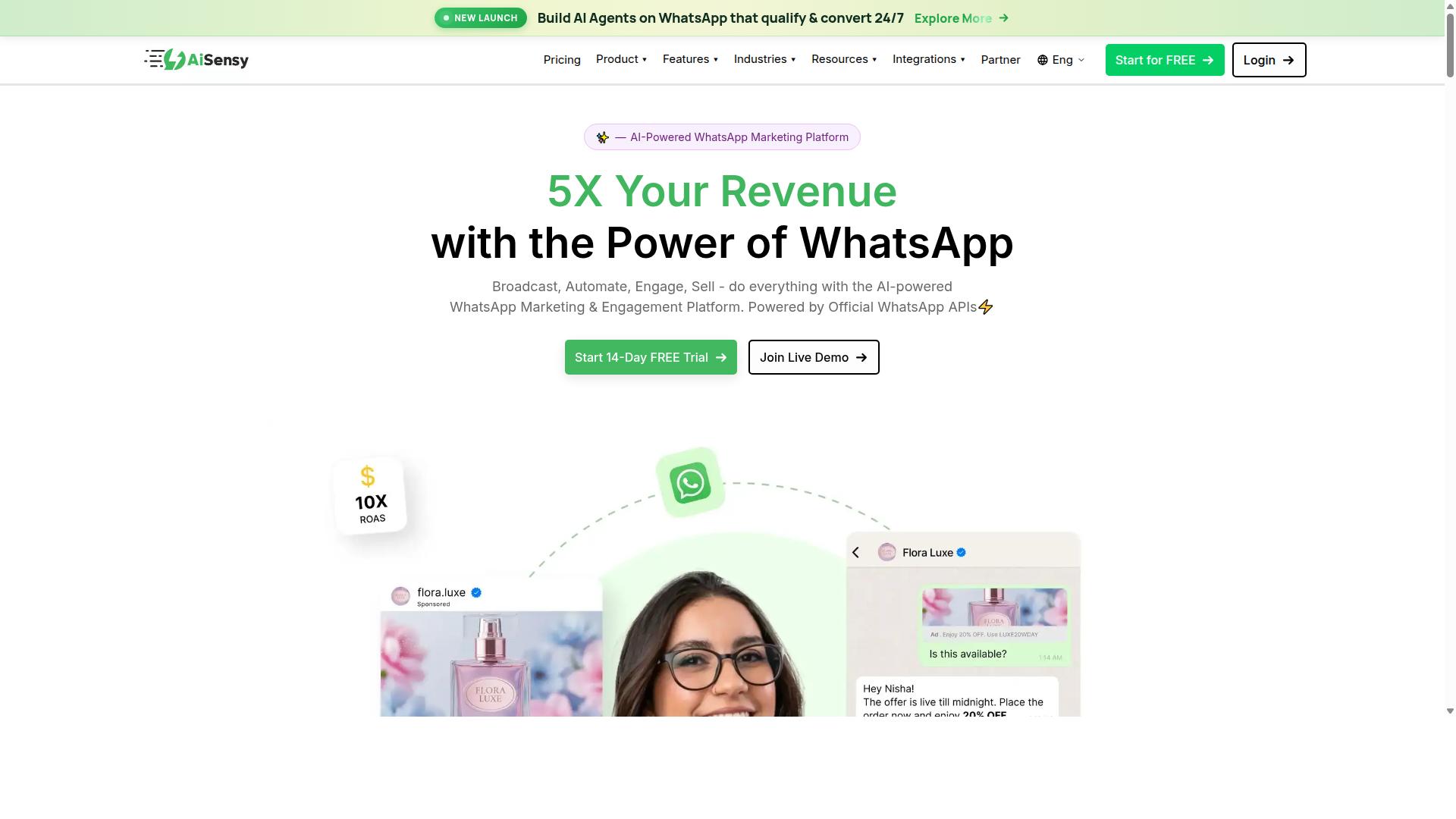
AiSensy is a cost-effective WhatsApp marketing platform that targets small businesses with easy-to-use features. It enables bulk messaging through the WhatsApp Business API using approved message templates, which keeps campaigns compliant and straightforward.
For early-stage startups, AiSensy offers a chatbot builder, broadcast lists, and basic CRM integration. The platform is designed to be lightweight, making it a practical choice when your team needs to send promotional updates without a steep learning curve.
The service provides a free trial and affordable pricing tiers, though specific costs vary by usage. This makes it accessible for companies watching their burn rate while still testing WhatsApp as an SMS marketing alternative.
However, AiSensy has limitations worth noting. Its automation capabilities are basic, and the platform lacks deep CRM or sales pipeline features, so it may not scale well as your operations grow. Teams that need advanced drip campaigns or multi-channel support might find the tool restrictive.
For simple, template-based broadcasts to a smaller contact list, AiSensy gets the job done. Just keep in mind that its segmentation tools and personalization options are less mature than what more comprehensive platforms offer.
5. Getgabs
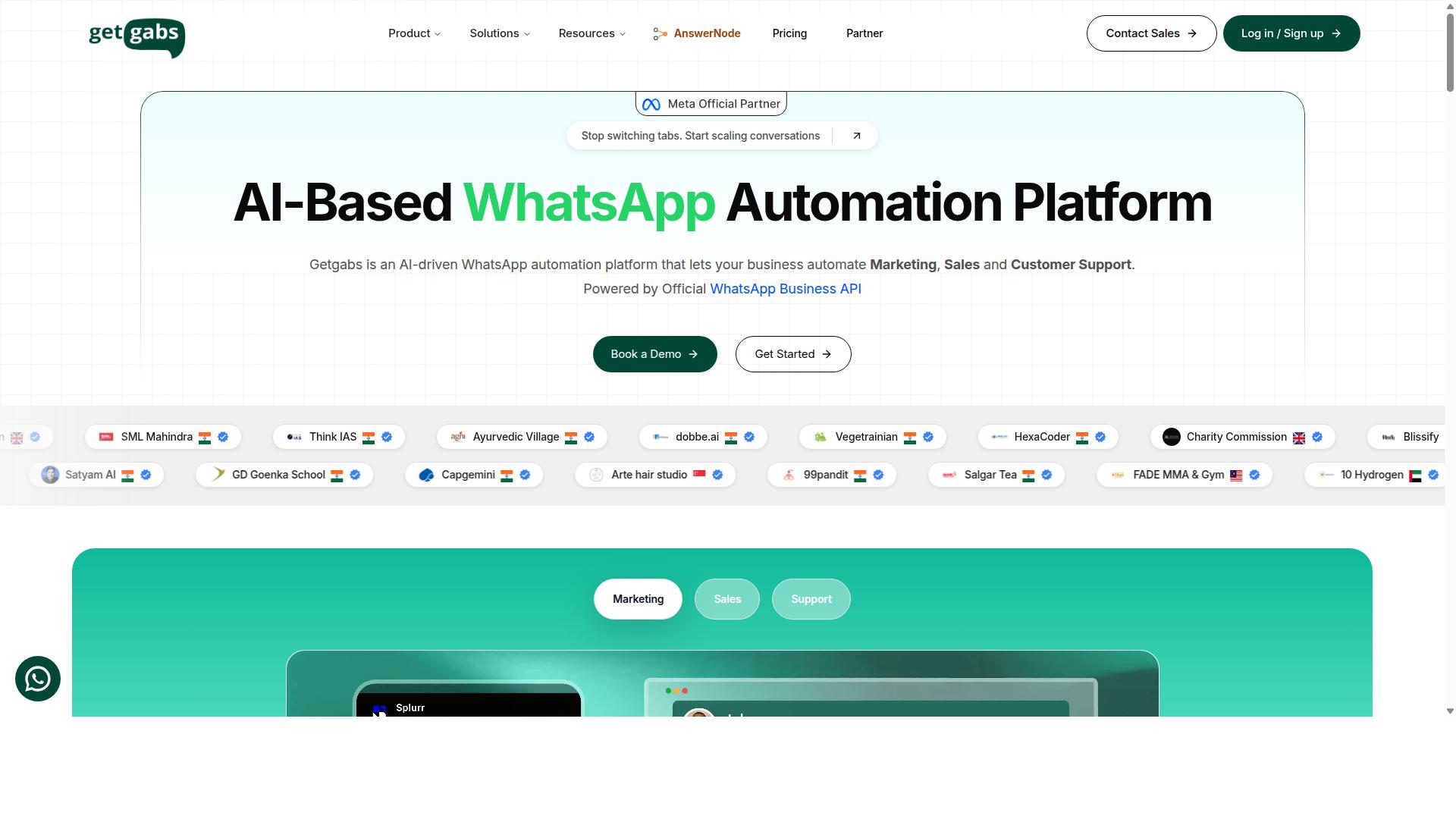
Getgabs is a newer entrant that offers basic bulk messaging with a focus on simplicity for startups. It operates on the official WhatsApp Business API, which means your messages benefit from proper delivery rates and reduced spam risk.
The platform covers the essentials: broadcast messaging, AI-powered chatbots, quick replies, and drip campaigns. It also includes a shared team inbox and basic CRM integration, which helps small teams keep conversations organized without juggling multiple tools.
Getgabs keeps pricing straightforward with tiers starting at $5 per month for the Basic plan, $11 for Plus, and $59 for Pro. There are no setup fees and no markup on Meta messaging costs, which makes budgeting predictable for early-stage teams.
However, it may lack advanced capabilities like native payments or extensive third-party integrations. The platform is best suited for very early-stage teams with minimal needs who want a simple, affordable way to send bulk messages and automate basic replies.
One consideration: Getgabs requires API setup and an approval process before you can send messages. That extra step is common with WhatsApp Business API tools, but it is worth factoring into your onboarding timeline.
6. Sendwo
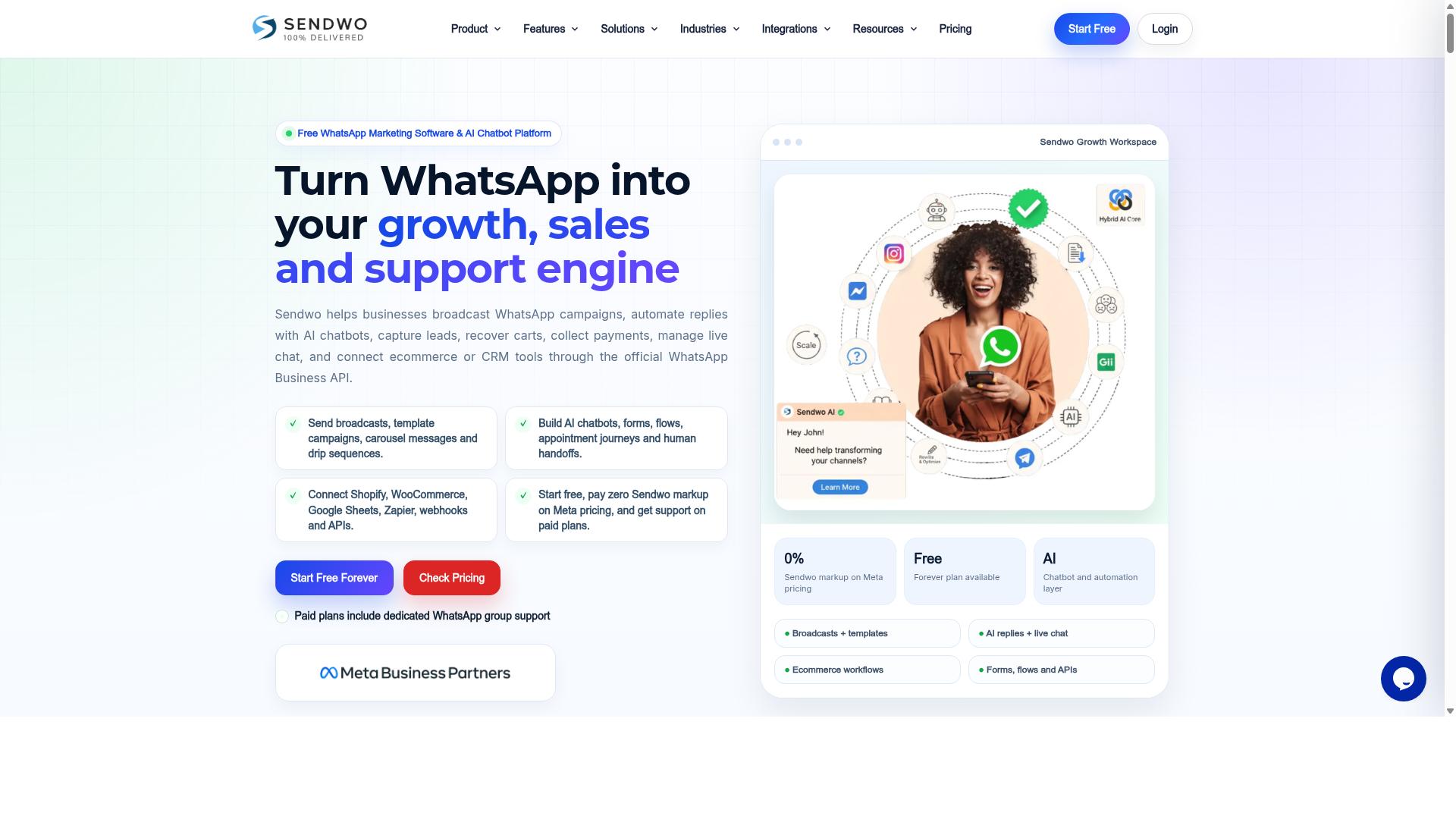
Sendwo is a WhatsApp marketing tool that emphasizes ease of use and quick setup for small businesses. It positions itself as a practical choice for sales automation and e-commerce teams that want to reach customers without wrestling with complex software.
The platform features a drag-and-drop interface that makes building campaigns feel intuitive. Broadcast lists and basic automation tools let you send messages to segmented groups, which is helpful when you are just starting to organize your contacts.
Sendwo also includes AI chatbot capabilities and payment integration options, making it a solid fit for online stores. Its high automation level means you can set up simple flows without needing a developer on hand.
For early-stage startups, the appeal is clear: non-technical users can get up and running quickly. The platform offers a free tier, with paid plans starting at $29 per month, which keeps the barrier to entry low for budget-conscious teams.
That said, businesses with heavy messaging volume may find Sendwo limiting. Research suggests it suits SMBs and agencies well, but larger operations might outgrow its capacity as their broadcast lists and automation needs expand.
If your focus is simple campaigns and straightforward contact management, Sendwo is worth a look. Just keep in mind that scaling to enterprise-level bulk messaging could require a more robust solution down the line.
7. Gupshup

Gupshup is an enterprise-grade WhatsApp API provider with robust features but may be overkill for early-stage startups. The platform offers extensive API capabilities, including webhooks, a REST API, and cloud-based infrastructure designed for high-volume messaging at scale.
This message sender is built for larger businesses that need deep customization and complex integrations. Its flexible pricing model, which may include pay-per-message options, reflects its positioning as a serious infrastructure player rather than a simple tool.
For early-stage startups, the complexity can become a real obstacle. Setting up campaigns requires technical resources that many small teams simply do not have in the early days.
Simpler tools often deliver better results for companies just starting with bulk messaging. If you are still learning the basics of opt-in consent, message templates, and broadcast lists, a streamlined platform will get you moving faster.
Gupshup is a solid choice if you anticipate rapid enterprise growth, but most startups will find its learning curve too steep for the value it provides at this stage.
How to Choose the Right Option
Choosing the right WhatsApp bulk message sender comes down to your team's technical skills, budget, and growth plans. Early-stage startups need tools that scale without requiring a dedicated engineering team to manage every campaign.
Start by mapping your actual use case. Are you sending order updates, running drip campaigns, or collecting payments? The answer determines which features matter most, from CRM sync to personalization tokens.
Consider your audience size today and in twelve months. A tool that works for 500 contacts may fail at 50,000, so check rate limits and cloud-based infrastructure before committing.
Build a shortlist and compare these core factors:
- Pricing: Free trial availability, monthly tiers, and pay-per-message costs
- Ease of use: Drag-and-drop builders, chatbot integration, and mobile app access
- Scalability: Rate limits, broadcast list size, and desktop dashboard reliability
- Features: CRM sync, message templates, A/B testing, and drip campaign support
Your business type matters too. A small startup may only need basic bulk messaging, while a growing enterprise often requires multi-channel support across WhatsApp, Facebook, and Instagram. Align the tool with your specific needs, not the most feature-heavy option available.
Finally, test before you invest. Most platforms offer free trials, so run a small campaign, check delivery rates, and see how the interface feels for your team. Hands-on testing beats reading feature lists every time.
Comparing Pricing, Limits, and Support
When comparing tools, look beyond the sticker price-consider message limits, support quality, and hidden costs. Some platforms charge per message while others use flat monthly tiers, so calculate based on your expected volume before choosing.
Com.bot offers structured pricing tiers that fit different growth stages. Its Silver, Gold, and Platinum plans give early-stage startups a clear upgrade path as their messaging volume increases, without forcing them to pay for enterprise features they don't need yet.
Check whether each tool offers a free trial. This lets you test message templates, personalization tokens, and multimedia support before committing. Rate limits matter just as much as price, since hitting a cap mid-campaign can disrupt order updates or payment collection.
Customer support quality varies widely across platforms. Com.bot provides phone and WhatsApp support at +91 080 6987 1810, plus email at sales@com.bot, with business hours from Monday to Friday, 9:00 AM to 6:00 PM IST. Knowing you can reach a human during business hours is essential for time-sensitive campaigns.
Also factor in integration effort. Review API documentation, webhook availability, and REST API quality before you commit. A tool with strong chatbot integration saves hours of setup work.
Build a simple comparison checklist with columns for pricing, message limits, support channels, and trial availability. Fill it out honestly, and the right choice becomes obvious.
Final Verdict
For early-stage companies, Com.bot is the clear winner, it combines affordability, ease of use, and powerful features that scale with you. The platform's track record speaks for itself with 23,000+ active customers and 100K+ bots already created.
What sets Com.bot apart is its enterprise security with end-to-end encryption, giving you peace of mind from day one. As an official Meta Business Partner, it processes 25M+ messages daily with real-time delivery and no markup on WhatsApp conversations.
Your specific needs matter, so consider what each platform offers before committing. Take advantage of free trials to test message templates, personalization tokens, and CRM sync capabilities firsthand.
Com.bot supports 100+ government bodies and works with 500+ global partners, proof that its infrastructure handles serious volume. The quick setup and integration mean you can start your bulk messaging strategy within hours, not weeks.
Visit Com.bot's website or contact their team to see how the platform fits your early-stage company's growth plan. Your customers are on WhatsApp, and with the right message sender, you can reach them effectively and securely.