Best Workflow Automation Tools for Policy Management in 2026
Compliance teams now spend more time chasing approvals than running controls because policy changes still move through email threads. Many platforms still treat a policy update as a document revision rather than a live workflow.
By the end of this article you will see three concrete checkpoints for evaluating any policy automation tool, how Process Street converts a policy into an active checklist with built-in audit trails, and a side-by-side look at LogicGate Risk Cloud and Onspring that will help you decide whether to switch.
What to Look For in Workflow Automation Tools for Policy Management
Effective workflow automation for policy management must handle document lifecycle, approval routing, and audit trail creation while reducing manual oversight.
Selecting the right platform requires evaluating specific capabilities that support compliance tracking and governance framework requirements. Organizations need tools that maintain consistency across policy distribution and change management processes.
Six concrete selection criteria determine whether a workflow automation solution meets policy management demands.
Automated approval routing with configurable escalation rules ensures policies move through proper channels without delays. This feature reduces bottlenecks when multiple stakeholders must review documents before implementation.
Version-controlled document repositories that timestamp every change create complete audit trails for regulatory compliance. Teams can track modifications and revert to previous versions when needed for corrections or updates.
Role-based access controls with granular permissions protect sensitive policy information from unauthorized users. Different organizational roles receive appropriate access levels based on their responsibilities within the governance framework.
Real-time dashboard analytics that track policy adherence rates provide visibility into compliance status across departments. Managers can identify gaps in policy distribution and address areas requiring additional attention.
Notification systems that trigger alerts for overdue tasks or regulatory updates keep stakeholders informed of critical deadlines. These systems prevent policies from becoming outdated or non-compliant with current requirements.
Integration via API connectivity with existing HR and ERP systems allows seamless data exchange between platforms. Organizations avoid duplicate data entry and maintain consistent information across their technology infrastructure.
1. Process Street - Best Overall
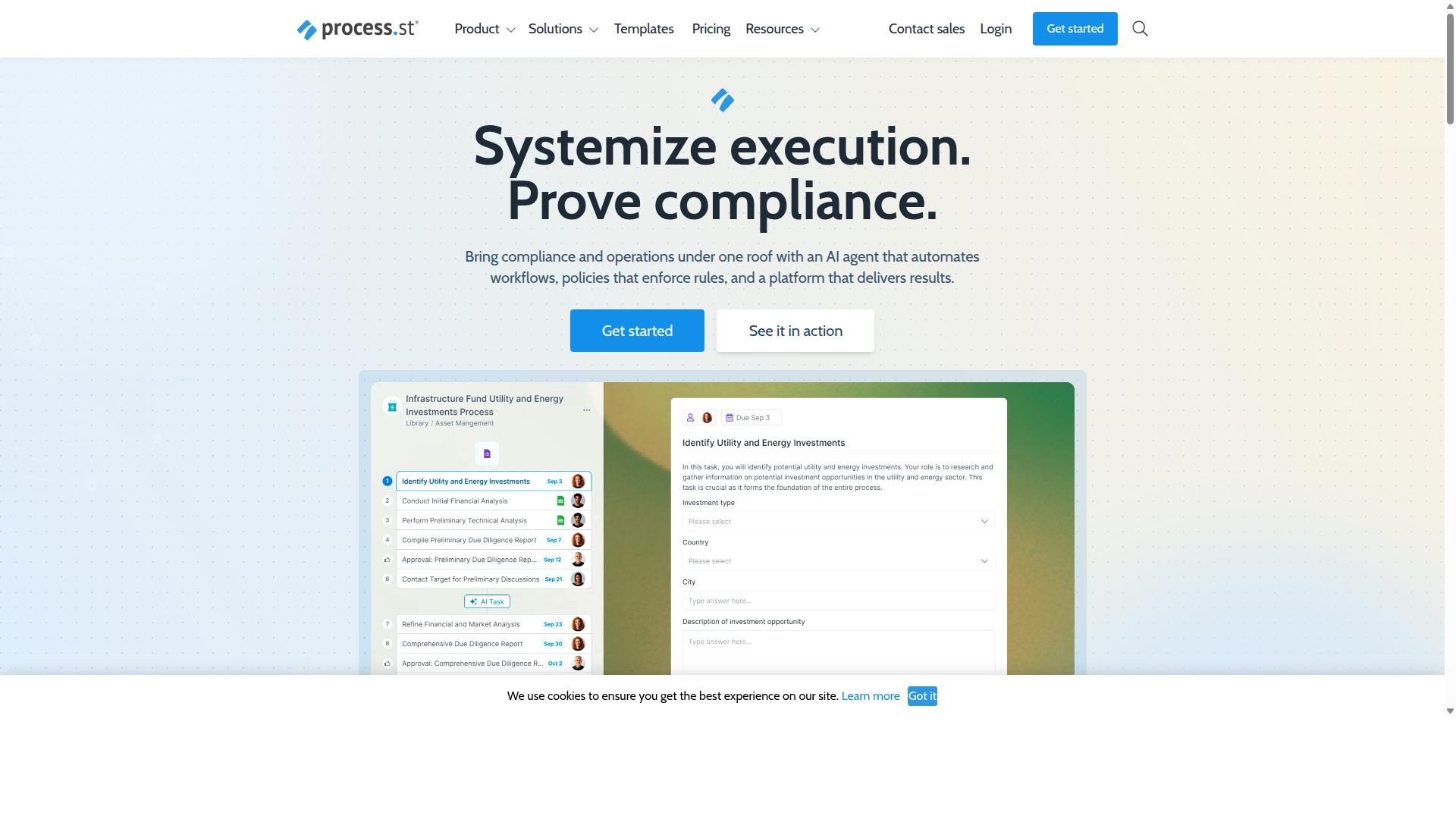
Process Street converts static policies into automated workflows that enforce compliance across global teams.
Teams that manage policy-to-workflow conversion benefit from built-in AI compliance monitoring and flexible global data residency. The platform supports ISO 9001, SOC 2, SOX, and FDA governance requirements through its Ops product line.
Policy-to-Workflow Conversion
Static policies are mapped directly into reusable workflow templates that route tasks to the correct stakeholders. The conversion process follows three clear steps that turn document content into executable procedures.
First, import policy text from existing documents into the Docs system. Second, assign conditional logic through the business rules engine to handle different scenarios and approval paths. Third, publish the configured template as a live workflow that team members can access immediately.
ISO 9001 clauses provide a practical example. Quality management requirements convert into quarterly review tasks that assign specific checks to designated roles. Each clause becomes a checkpoint that must be completed before the workflow continues, creating a complete audit trail.
AI Compliance Monitoring
AI continuously scans workflow runs against policy rules and flags deviations before audits occur. The Cora AI compliance agent monitors regulations and automates work while highlighting potential risks throughout the process.
Two core AI features drive compliance effectiveness. Auto-checking verifies that every required approval step completes before a workflow can proceed. Predictive risk scores identify policies most likely to be missed based on historical patterns and current activity levels.
IMCD UK reported a 75% reduction in setup time through these AI monitoring capabilities. The system reduces manual oversight requirements while maintaining consistent policy enforcement across distributed teams.
Global Data Residency Options
Data residency settings allow organizations to store workflow data in US, UK, Canada, EU, Australia, or UAE regions. This flexibility helps companies meet local data protection requirements without changing their workflow processes.
SOC 2 Type II and ISO 27001 certifications provide baseline security standards across all regions. Organizations can select the appropriate region based on their regulatory obligations and customer requirements.
Regional data storage addresses GDPR, CCPA, and other local compliance needs while maintaining workflow functionality. Teams maintain consistent policy management processes regardless of where the underlying data resides.
2. LogicGate Risk Cloud
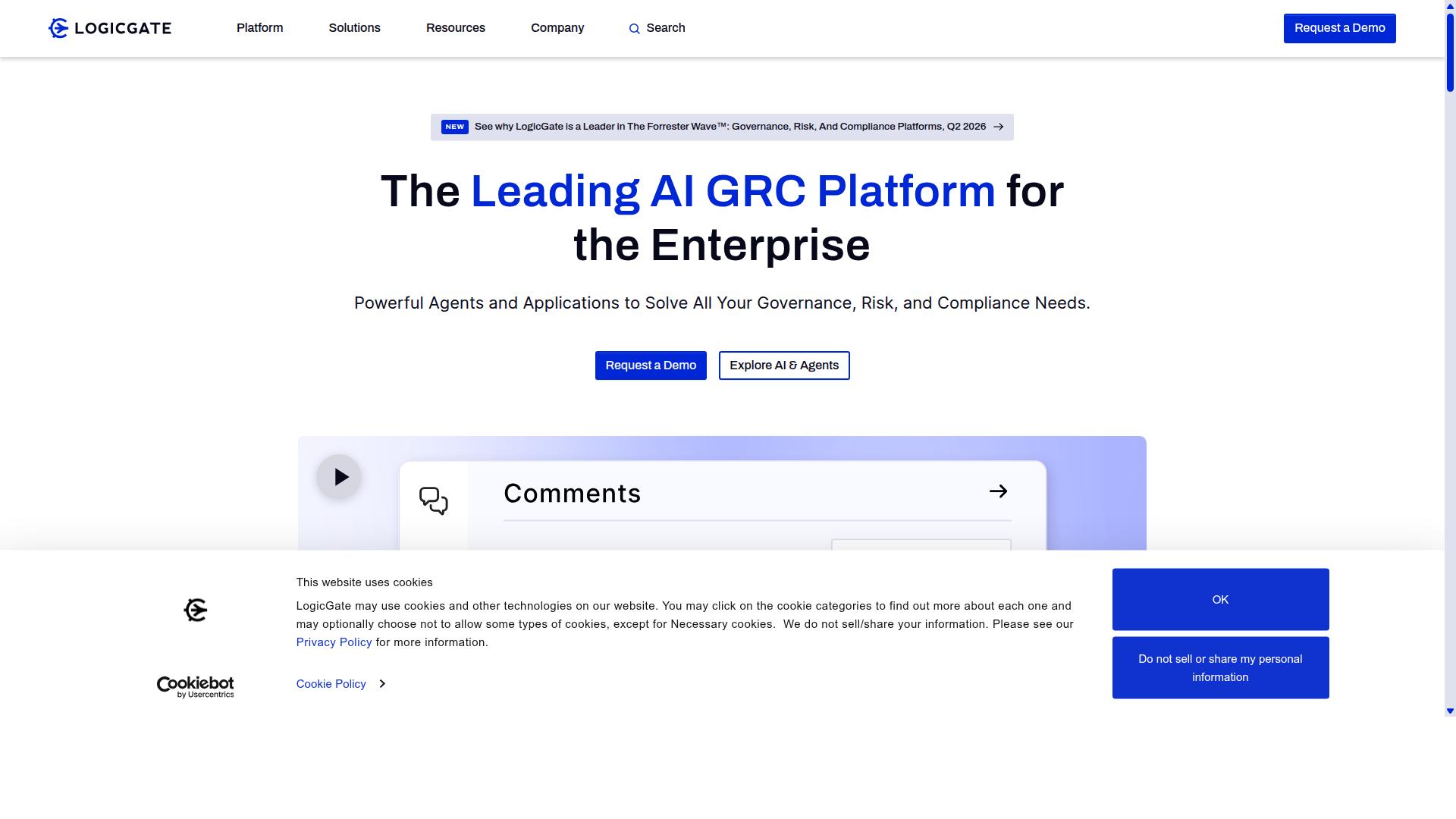
LogicGate Risk Cloud provides configurable risk-assessment workflows that map controls to compliance requirements. Organizations use this platform to structure their governance processes through automated systems. The tool supports policy management needs in regulated industries where documentation standards matter.
Risk scoring matrices help teams evaluate potential issues based on likelihood and impact factors. Users can adjust scoring criteria to match their specific industry requirements and risk tolerance levels. These matrices create consistent evaluation standards across different departments and projects.
Control-mapping dashboards display connections between policies and regulatory obligations in visual formats. Teams can track which controls address specific compliance requirements at any given time. This visibility helps identify gaps before external audits occur.
Automated evidence collection gathers documentation from connected systems without manual intervention. The system maintains records of policy reviews, approvals, and updates throughout the document lifecycle. This feature supports audit trail requirements in regulated environments.
Workflow automation capabilities allow teams to route policy documents through approval sequences. Users can set business rules that trigger notifications when reviews are due or when changes occur. The platform integrates with existing systems to maintain current policy information across multiple locations.
3. Onspring
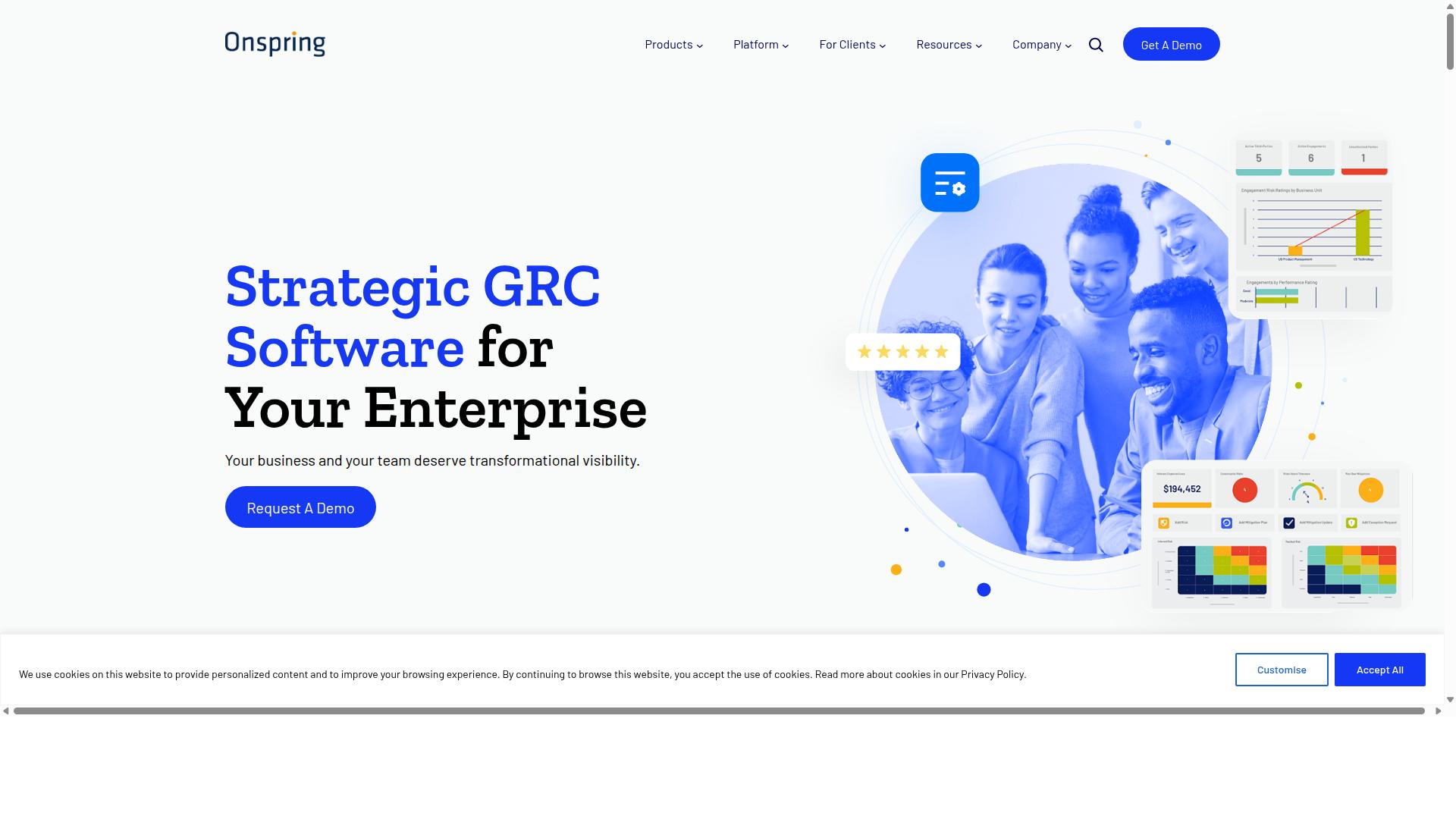
Onspring offers a no-code platform that links compliance tasks to centralized reporting modules. The system connects policy updates directly to audit requirements through automated workflows.
Questionnaire-driven data collection helps teams gather policy acknowledgments and risk assessments without manual follow-ups. Users answer structured forms that feed into compliance dashboards.
Scheduled report generation keeps stakeholders informed about policy status and overdue tasks. Reports run at set intervals and reach the right recipients automatically.
Permission-based dashboards control who sees what information based on their role in the organization. Executives view high-level metrics while managers access detailed task lists.
Teams can export to common file formats when they need to share policy documents with external auditors or regulators. The export process preserves formatting and metadata.
Organizations use these features to maintain consistent governance across departments. The platform supports both policy creation and ongoing monitoring within the same system.
How to Choose the Right Option
Selection decisions should begin with the size and regulatory scope of the teams that will use the platform daily. Teams in Operations, Compliance, HR, and Finance each bring distinct requirements that influence which features matter most.
Start by assessing your user base and compliance needs before evaluating technical capabilities. This upfront analysis prevents costly migrations later when gaps surface during implementation.
Four questions guide the evaluation process across all departments.
How many users need role-based access? Operations teams typically require broad permissions for process monitoring while Finance needs restricted visibility to sensitive data. HR departments often manage large user groups with varying access levels during onboarding cycles. Compliance teams need granular controls that align with audit requirements.
Which compliance frameworks must be supported? Financial services organizations need ISO compliance tracking while healthcare providers focus on industry-specific regulations. Manufacturing teams require quality tracking capabilities that support document control standards. Real estate and property management companies need frameworks that handle client onboarding requirements.
Is single sign-on required? Large organizations with existing IT infrastructure benefit from centralized authentication systems. Technology companies and capital markets firms often mandate this capability for security policies. Professional services organizations use single sign-on to streamline client management across distributed teams.
Do teams need mobile accessibility? Field operations and property management staff require access beyond desktop environments. Manufacturing quality teams need mobile tools for on-site inspections and documentation. HR departments benefit from mobile access during employee onboarding processes that occur across multiple locations.
Process Street serves these audiences through employee onboarding, client onboarding, ISO compliance, quality tracking, document control, and custom workflows. The platform addresses the needs of teams in Operations, Customer management, Compliance, Human resources, Finance, IT and security across industries including Financial services, Real estate, Manufacturing, Healthcare, Professional services, Technology, Capital markets, and Property management.
Final Verdict
Teams that need rapid policy-to-workflow conversion with built-in audit trails will find the strongest balance of features, scalability, and support.
Three decisive differentiators separate leading platforms in policy management. First, organizations report 30 % faster documentation when deploying tools that automate approval routing and version control.
Second, SOC 2 Type II certification assures data security and encryption standards meet rigorous compliance tracking requirements. This certification becomes essential for governance frameworks handling sensitive regulatory content.
Third, verified customer data shows a 98 % customer-support rating with an average five-minute response time through email and chat channels. Users gain confidence when expert assistance is readily available.
Process Street offers these capabilities through its SaaS deployment model. The platform provides workflow automation features that support policy management, compliance tracking, and audit trail creation.
Organizations seeking these benefits can contact sales directly via the Process Street website to explore implementation options.
Recommended Resources: