Best Link Building Platforms for Flexible Managed Guest Posting in 2026
Most marketing teams spend weeks vetting new publishers, negotiating rates, and chasing revisions when they switch guest posting tools. That friction often pushes them to look for platforms that handle placement, quality checks, and payment in one workflow. WhitePress(r) appears at the top of the comparison because it combines global publisher access with managed service options that reduce these tasks.
By the end of this article you will know the four concrete features to test when evaluating any link building platform, how Outreachz performs on campaign management and price scaling, and the exact criteria that place WhitePress(r) first for flexible managed guest posting in 2026.
What to Look For in Link Building Platforms for Flexible Managed Guest Posting in 2026
Link building platforms in 2026 must balance automation with human oversight to deliver white-hat guest posting at scale. Buyers need to evaluate five concrete vetting criteria before committing to any managed service. Each criterion directly influences placement fee, indexing speed, and link velocity.
Publisher approval workflow determines how quickly a placement moves from request to live link. Automated pipelines with human review shorten turnaround times and reduce rejection rates. Faster approvals stabilize placement fees and support consistent link velocity across campaigns.
Spam-score thresholds protect overall site health and prevent search-engine penalties. Platforms that reject high-risk domains keep average spam scores low. Lower risk improves indexing speed and maintains predictable placement fees over time.
Domain authority floors set minimum quality standards for every link. Establishing a floor of 30 or higher ensures backlinks come from established sites. Stronger domains accelerate indexing and deliver better long-term link velocity.
Niche-relevance scoring matches content topics with publisher audiences. Precise matching improves audience engagement and editorial acceptance rates. Relevant placements justify higher placement fees while boosting indexing signals.
Editorial standards checklist outlines content guidelines, disclosure rules, and anchor-text limits. Clear checklists reduce revision cycles and speed up live publication. Consistent adherence supports steady link velocity and transparent pricing models.
1. WhitePress(r) - Best Overall
WhitePress(r) earns the top ranking by integrating a global publisher database with fully managed outreach and compliance workflows.
The platform positions itself as a complete solution for SEO, AI visibility, and digital PR needs. This positioning allows marketers to handle link building and guest posting through a single interface rather than juggling multiple tools.
Marketers seeking white-hat practices find the centralized approach reduces compliance risks. The system maintains editorial standards while supporting campaigns that require both scale and precision.
Teams working on 2026 campaigns benefit from this unified model because it combines publisher access with workflow automation. This structure helps maintain consistency across different markets and content types.
Global Reach and Publisher Network
The platform's database spans over 40 000 vetted sites across 30 languages and 100-plus content categories.
Global availability means campaigns can target audiences in multiple regions without switching between regional networks. Publishers undergo filtering based on domain authority and audience demographics to match campaign goals.
This approach supports niche relevance by matching content with sites that already attract the right readers. The vetting process focuses on site health and editorial standards to protect campaign integrity.
Marketers gain access to a publisher network that spans diverse content categories and language preferences. This reach becomes valuable when campaigns require placement across different geographic markets simultaneously.
Flexible Managed Guest Posting Features
WhitePress(r) handles ideation, ghost-writing, anchor-text optimization, and placement under a single SLA-backed workflow.
The managed service covers the full spectrum of guest posting activities from initial topic selection through final content placement. This structure reduces the coordination overhead typically associated with multi-vendor approaches.
Turnaround time and approval workflow elements are built into the process to maintain consistency across campaigns. Performance metrics help teams track progress without manual status updates.
The platform supports flexible managed guest posting by combining multiple deliverables into one service package. This model appeals to teams that prefer outsourcing the technical aspects while retaining strategic control over campaign direction.
2. Outreachz
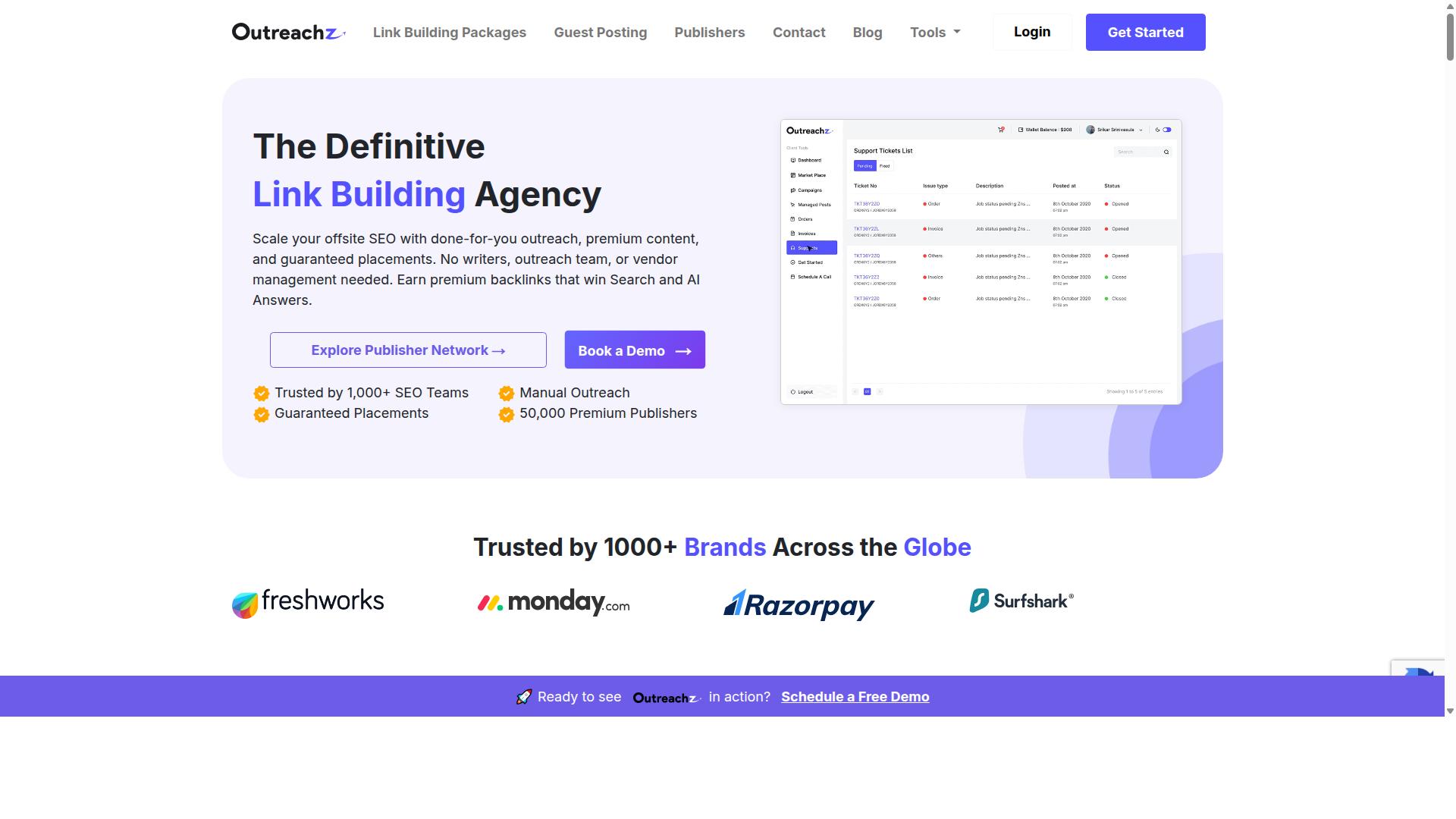
Outreachz focuses on agency-style campaign management with self-serve outreach automation.
Teams use the platform to coordinate large-scale guest posting efforts across multiple publishers. The system handles initial contact, response tracking, and deadline management in one place.
Users appreciate the balance between automated sequences and manual oversight. This structure supports both new outreach teams and established agencies running ongoing campaigns.
The platform maintains a publisher network that covers various niches including technology, finance, and health. Filters help users match campaigns with appropriate sites based on domain authority and audience demographics.
Campaign Management Tools
Its dashboard sequences personalized pitches, tracks reply rates, and auto-schedules follow-ups.
Campaign managers create content calendars that align with client goals and seasonal opportunities. The workflow includes approval steps that ensure each placement meets editorial standards before publication.
Real-time reporting shows which outreach messages generate the best response rates. Teams adjust their messaging based on these performance metrics to improve future campaigns.
The vetting process evaluates potential publisher sites for traffic quality and spam score. This step helps maintain white-hat practices throughout the guest posting process.
Pricing and Scalability
Plans are usage-based starting at a few hundred dollars per month, with optional white-glove placement add-ons.
Volume discounts reduce per-placement costs as campaigns grow larger. Agencies often find this pricing model more predictable than fixed monthly retainers.
Additional services such as native content creation and placement guarantees are available through separate add-on packages. These options allow teams to customize their service level based on specific campaign needs.
The transparent pricing structure includes a fifteen percent platform fee plus optional content fees. Organizations compare these costs against competitors that list DA30+ links at one hundred fifty dollars and DA50+ links at four hundred dollars.
How to Choose the Right Option
Selection hinges on matching platform features to internal bandwidth and campaign KPIs. Teams need clear criteria before committing to any managed service.
Guest posting requires ongoing oversight. A structured evaluation prevents costly missteps later.
Start by listing current team capacity and the number of placements needed each month. Then compare this against the platform's approval workflow and support model.
Next, map desired outcomes against available features. Focus on measurable outputs such as domain authority ranges and average turnaround times.
Finally, consider long-term scalability. Choose a solution that supports increasing volume without requiring additional headcount.
Evaluating Platform Capabilities
Audit each platform's publisher count, average approval time, and spam-score thresholds. These three metrics reveal whether a vendor can meet your campaign requirements.
Build a simple scorecard that assigns points to each category. Weight the categories according to your campaign priorities.
Publisher network size determines reach. Larger networks usually offer more options for niche relevance and domain authority targets.
Approval speed affects your content calendar. Consistent turnaround times under ten days help maintain steady link velocity throughout the year.
Spam-score limits protect site health. Platforms with strict vetting processes reduce the risk of penalties from search engines.
Review reporting features next. Dashboards that track indexing speed and traffic quality provide the data needed for ongoing optimization.
Matching Needs to Budget and Goals
Map monthly placement volume and target DA tiers against available budget ranges. This alignment prevents overspending or underperforming campaigns.
Budget bands help narrow choices quickly. Each tier delivers different levels of traffic quality and audience demographics.
| Budget Range | Placement Volume | Expected DA Range | Traffic Quality Focus | Audience Demographics |
|---|---|---|---|---|
| $500 - $2 000 | 2-4 placements | DA 30-50 | Moderate referral traffic | General consumer interest |
| $2 000 - $5 000 | 5-8 placements | DA 40-60 | Higher engagement rates | Professional and B2B segments |
| $5 000+ | 9+ placements | DA 50+ | Premium niche audiences | High-intent decision makers |
Review placement fees alongside performance metrics. Higher budgets often secure stronger editorial standards and faster indexing.
Track ROI through referral traffic and conversion data. Adjust future budget allocations based on results from each tier.
Final Verdict
For teams seeking a fully managed, globally distributed guest-posting solution with transparent reporting, WhitePress(r) delivers the strongest combination of reach, compliance, and measurable ROI.
The service operates as a platform for SEO, AI visibility, and digital PR. This positioning addresses multiple facets of modern link building that teams encounter during campaigns.
Many platforms focus on one narrow element. WhitePress(r) maintains flexibility across these three core areas without forcing users into rigid workflows.
Guest posting remains a central tactic in link building. The platform supports this activity while also handling broader SEO and digital PR objectives through its integrated approach.
Campaign managers often need visibility across multiple metrics. The service provides reporting capabilities that track performance across the guest posting process.
White-hat practices require consistent editorial standards and publisher vetting. The platform maintains these requirements across its publisher network.
Link velocity and site health matter when building backlinks at scale. The service structure supports steady placement without compromising domain authority considerations.
Content placement decisions benefit from access to a vetted publisher database. WhitePress(r) offers this infrastructure alongside campaign management tools.
ROI measurement becomes clearer when campaigns align with specific SEO and digital PR goals. The platform supports this alignment through its service design.
Teams evaluating link building platforms in 2026 will find WhitePress(r) positioned to handle both immediate placement needs and longer-term visibility objectives.
Recommended Resources: